
Parts of a Horse | Horse Body Parts Vocabulary in English For Kids
Home » Animal Body Parts • Vocabulary » Parts of a Horse | Horse Body Parts Vocabulary in English For Kids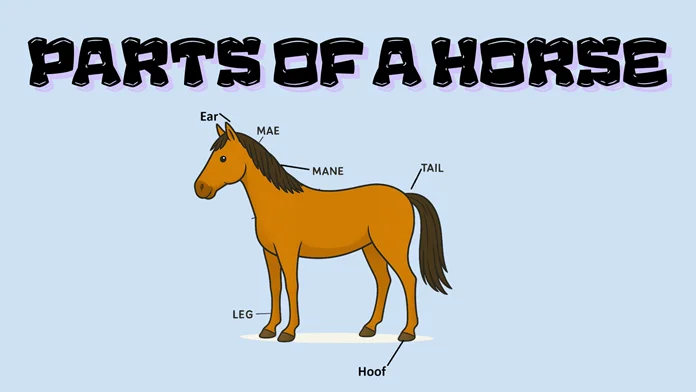
In this lesson, you will explore the parts of a horse. Horses are known for their speed, balance, and gentle nature in many environments. They live on farms, in open fields, and sometimes in wild grasslands.
Learning about horse body parts in English for kids and students supports a better understanding of animals. This knowledge helps build a useful vocabulary of animals body parts in a fun and engaging way.
List of Body Parts of a Horse Vocabulary in English with Pictures
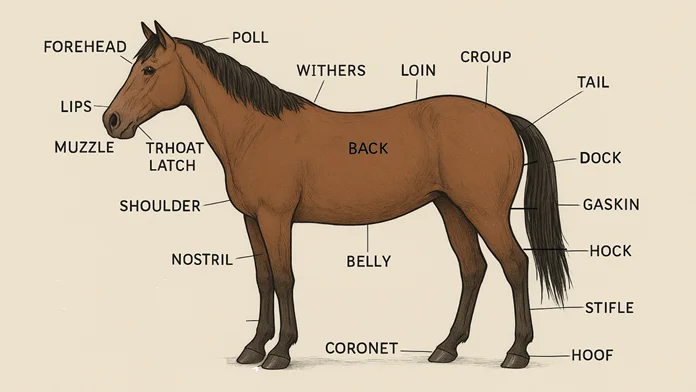
| Pastern | Knee | Forearm |
|---|---|---|
| Lips | Muzzle | Nostril |
| Eye | Forehead | Ear |
| Poll | Crest | Shoulder |
| Withers | Back | Loin |
| Croup | Dock | Tail |
| Gaskin | Hock | Stifle |
| Belly | Cannon | Coronet |
| Point of Hip | Chin | Thigh |
| Chest | Ergot | Heel |
| Hoof | Elbow | Breast |
| Neck | Throat Latch |
Horse Body Parts List with Examples
Pastern
The part between the fetlock and the hoof. It helps absorb shock and provides flexibility during movement.
Knee
The large joint in the front leg. It bends to support walking, running, and jumping.
Forearm
The strong area is above the knee. It contains muscles that help lift and move the front legs.
Lips
It is used for grasping food. They help the horse pick grass and feel textures.
Muzzle
The front part of the face, including the mouth and nostrils. It helps the horse breathe, eat, and senseits surroundings.
Nostril
The openings of the nose. They allow breathing and help detect scents and air changes.
Eye
Large and placed on the sides of the head. They provide a wide vision to detect movement and danger.
Forehead
The front part of the head between the eyes and ears. It gives shape to the head and protects the skull.
Poll
The area just behind the ears. It connects the head to the neck and helps with head movement.
Crest
The upper part of the neck where the mane grows. It adds strength and balance to neck movements.
Shoulder
The joint connecting the front leg to the body. It helps with forward motion and flexibility.
Withers
The highest point between the neck and the back. It is used to measure the horse’s height and attach saddles properly.
Back
The area between the withers and the loin. It supports the rider’s weight and connects the front and hind parts.
Loin
The strong section between the back and the croup. It gives power for jumping and fast running.
Croup
The top of the hindquarters leading to the tail. It helps with propulsion and supports tail movement.
Dock
The base of the tail. It controls tail movement and supports the tail muscles.
Tail
Long and flowing, it helps swat insects and express emotions.
Gaskin
The muscular part of the hind leg above the hock. It provides strength for kicking and galloping.
Hock
The joint on the hind leg is similar to an ankle. It provides flexibility and supports jumping power.
Stifle
The upper joint in the hind leg, like a human knee. It aids in running and bending movements.
Belly
The underside of the body. It protects internal organs and shows the horse’s health condition.
Cannon
The strong bone below the knee or hock. It supports weight and movement during running.
Coronet
The soft band at the top of the hoof. It produces new hoof growth and protects the foot’s base.
Point of Hip
The outer point of the hip bone. It helps identify body structure and supports hind leg movement.
Chin
The lower part of the face below the mouth. It helps guide the bridle and supports jaw movement.
Thigh
The muscular area of the hind leg above the stifle. It provides power for running and jumping.
Chest
The broad front area between the shoulders. It houses the heart and lungs and supports strong movement.
Ergot
A small callous-like growth on the back of the fetlock. It’s a natural part of the horse’s skin structure.
Heel
The rear part of the hoof. It supports balance and absorbs shock during movement.
Hoof
The hard covering on each foot. It protects the leg and provides grip and support.
Elbow
The joint between the shoulder and forearm. It helps the horse bend its front leg while moving.
Breast
The front part of the body below the neck. It contains muscles important for movement and strength.
Neck
The flexible part connecting the head to the body. It helps with balance, grazing, and communication.
Throat Latch
The area under the jaw where the head and neck meet. It helps control head movement and holds tack securely.
 Hobbies That Start With M | Fun Hobbies Word List
 Hobbies That Start With L | Fun Hobbies Word List
 Hobbies That Start With K | Fun Hobbies Word List